
Author: Tassia Owen

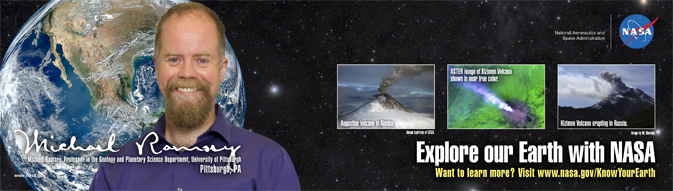
Mike Ramsey, a professor and vulcanologist at the University of Pittsburgh, is among 22 scientists being featured during April’s Earth Month for Know Your Earth 3.0, Local Connections, a partnership between 22 of NASA’s Earth-observing missions that nominated a scientist or engineer to be featured on NASA websites during April 2013. Ramsey uses data from the Advanced Spaceborne Thermal Emission and Reflection Radiometer (ASTER) on board Terra.
Read more

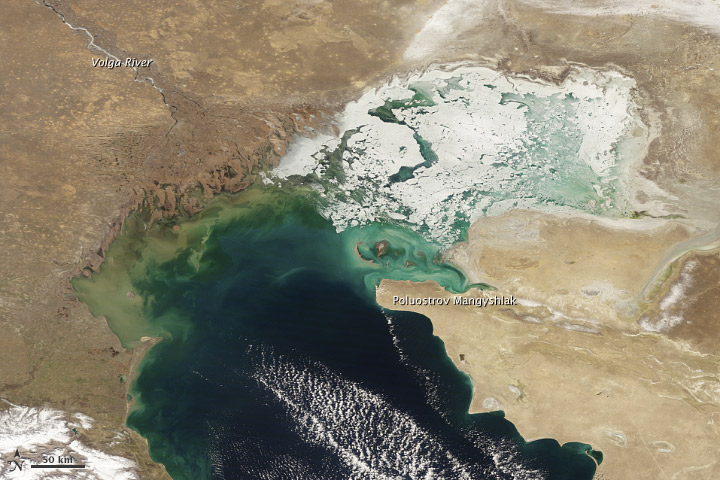
The Caspian Sea isn’t really a sea but in fact a giant lake that spans roughly 1,000 kilometers (600 miles) from north to south. In the winter, ice often forms over the lake’s northernmost reaches, while the central and southern parts remain ice free. Temperatures are generally lower in the north, so you might guess that the ice owes its existence purely to the higher latitude. But the reality is more complex: From north to south, the Caspian Sea also exhibits differences in salinity and depth. Read more

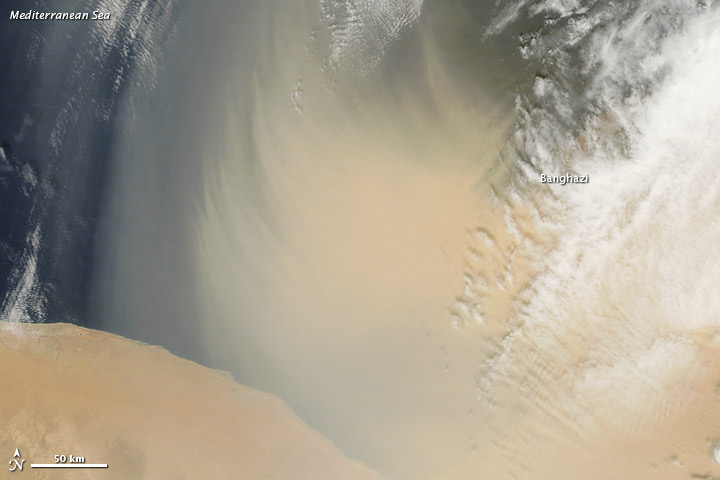
A dust storm blew out of Libya and across the Mediterranean Sea in late March 2013. Southwest of the coastal city of Banghazi (Benghazi), an especially thick dust plume spanned roughly 100 kilometers (60 miles), and the plume was thick enough to completely hide the ocean surface below. Read more

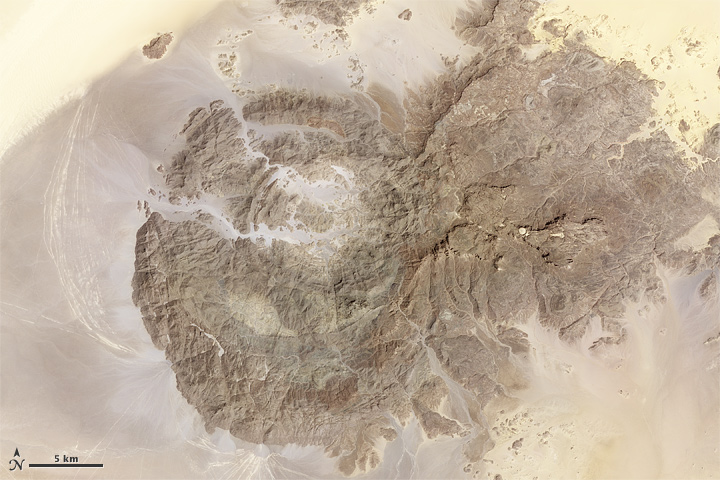
Where the borders of Egypt, Sudan, and Libya meet, a rugged mountain complex rises from the Sahara. The peaks of Jebel Uweinat reach elevations about 2,000 meters (7,000 feet) above sea level. Geologists exploring Jebel Uweinat have found rock layers that are hundreds of millions of years old, preserving traces of landscapes that were very different from the bone-dry environment that prevails here today. Read More

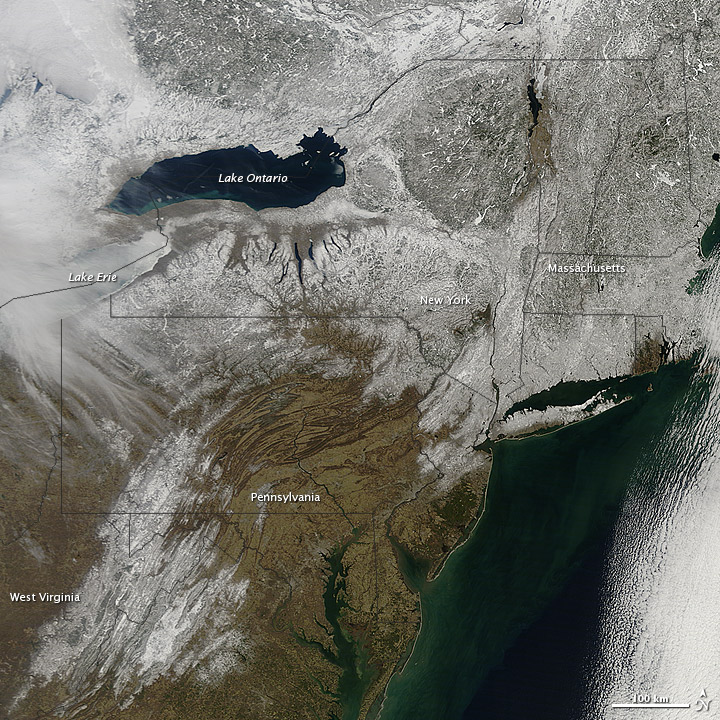
Snow cover sprawled across the northeastern United States in early March 2013. The Moderate Resolution Imaging Spectroradiometer (MODIS) on NASA’s Terra satellite captured this natural-color image on March 9. Snow cover stretched from West Virginia into Canada, and from the western shore of Lake Ontario to the Atlantic Ocean. Read more