
Author: Tassia Owen

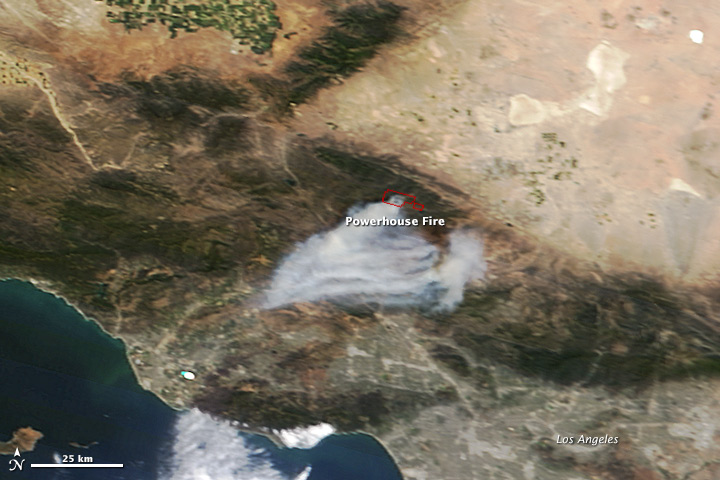
On May 31, 2013, the Moderate Resolution Imaging Spectroradiometer (MODIS) on NASA’s Terra satellite captured this image of the Powerhouse fire burning in steep terrain north of Los Angeles, California. Red outlines indicate hot spots where MODIS detected unusually warm surface temperatures associated with fires. Read more
This article from IEEE  talks about how satellite data can predict agricultural output and famine.  Terra plays a large role in measuring the National Data Vegetation Index (NDVI), which is measured using spectral bands 1 and 2 (infrared to visible light) of the Moderate-resolution Imaging Spectroradiometer. NDVI compares the amount of light reflected in near-infrared with that reflected in visible light; if there is more infrared, the vegetation in that spot is likely to be dense and thus yield more of the crop.” Armed with this information and data from other satellites researchers are able to get a better picture of how the worlds crops are faring.  Read more

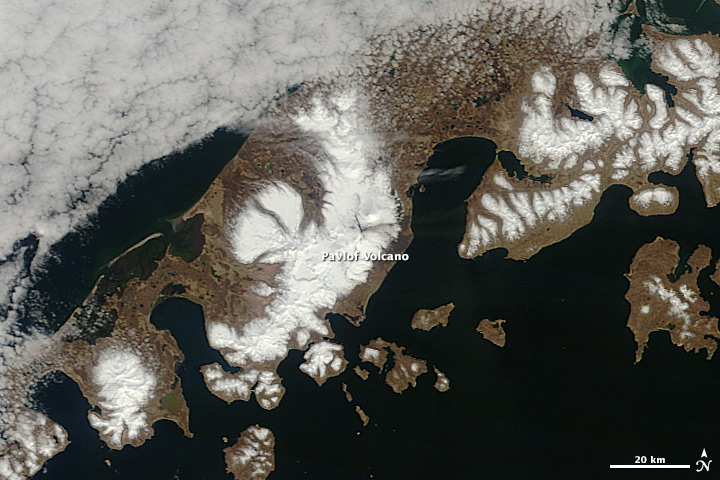
For the third time this century, Alaska’s Pavlof Volcano is erupting. The Alaska Volcano Observatory first detected earthquakes associated with the movement of magma and heat at Pavlof’s summit on May 13, 2013. The Moderate Resolution Imaging Spectroradiometer (MODIS) on the Terra satellite captured this image of a small ash plume and lava flow on the morning of May 14. Read more

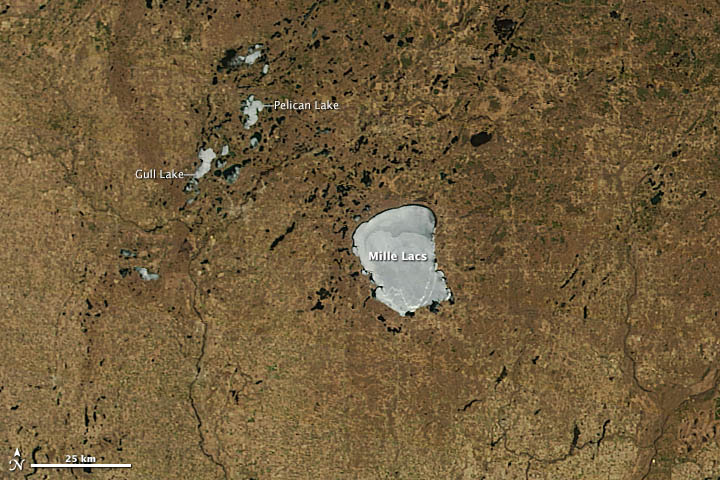
When the Moderate Resolution Imaging Spectroradiometer (MODIS) instrument on NASA’s Terra satellite passed over northern Minnesota on May 12, 2013, spring had transformed winter’s snowy white landscape into shades of green and brown. But several lakes remained stubbornly white. In 2013, unseasonably cool spring weather has left ice choking many of Minnesota’s lakes weeks longer than usual. Read more

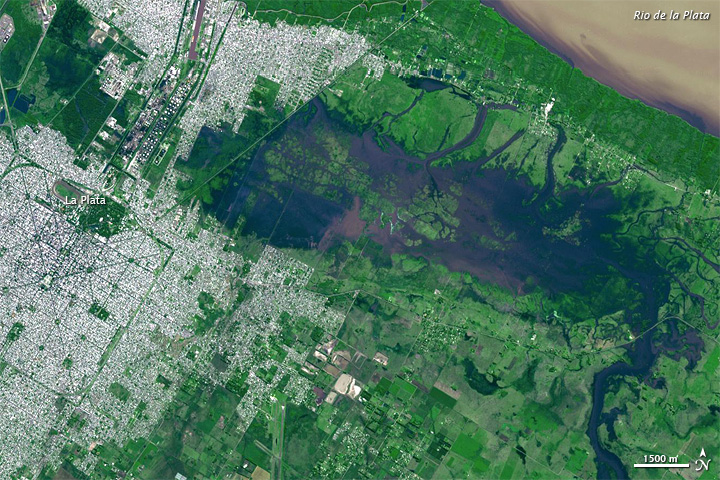
In early April 2013, severe flooding claimed more than 50 lives, and forced thousands from their homes in the Buenos Aires region, news sources said. Many of the casualties occurred in La Plata, situated about 60 kilometers (40 miles) southeast of Buenos Aires. Roughly 40 centimeters (16 inches) of rain fell on La Plata in a two-hour period April 2-3, Agence France-Presse reported.

Flood water lingered when the Advanced Spaceborne Thermal Emission and Reflection Radiometer (ASTER) on NASA’s Terra satellite captured this image on April 4, 2013. Read more