Category: News and Events

News and Events

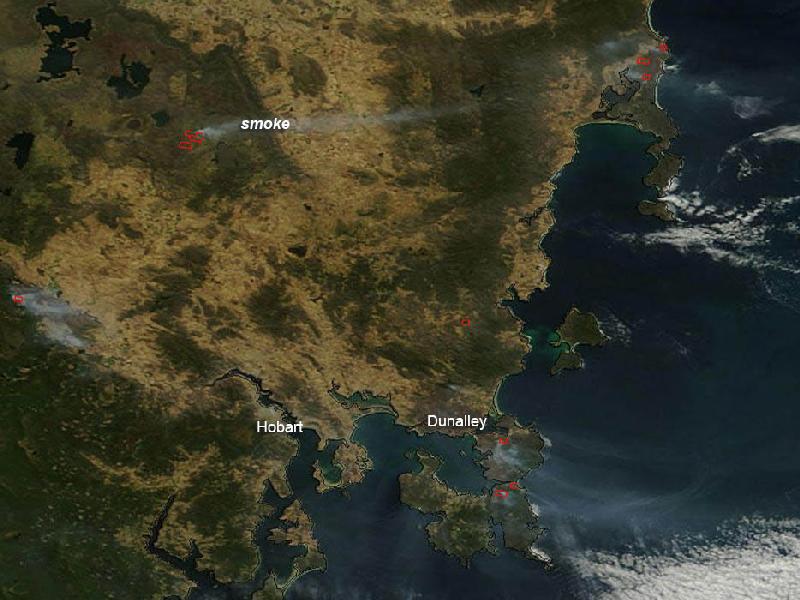
In January 2013, intense bushfires blazed in Tasmania, an island south of Australia. The Moderate Resolution Imaging Spectroradiometer (MODIS) on NASA’s Terra satellite captured this image showing numbers fires burning across the island on January 7, 2013. Red outlines indicate hot spots where MODIS detected unusually warm surface temperatures associated with fires. Read more.

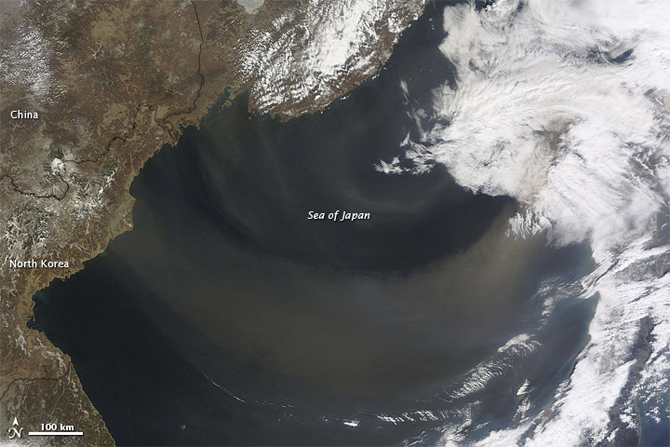
Dust Moving West of Sea of Japan

NASA and university scientists have made the first measurement-based estimate of the amount and composition of tiny airborne particles that arrive in the air over North America each year. With a 3-D view of the atmosphere now possible from satellites, the scientists calculated that dust, not pollution, is the main ingredient of these imports.Read more.

Mid-elevation forests – those between approximately 6,500 to 8,000 feet (1,981 to 2,438 meters) in elevation – are the most sensitive to rising temperatures and changes in precipitation and snowmelt associated with climate change, finds a new University of Colorado Boulder-led study co-funded by NASA. The study looked at how the greenness of Western U.S. forests is linked to fluctuations in year-to-year snowpack. Read more.

ASTER Helps Map Ancient Settlements in Mesopotamia

Image of Aster images

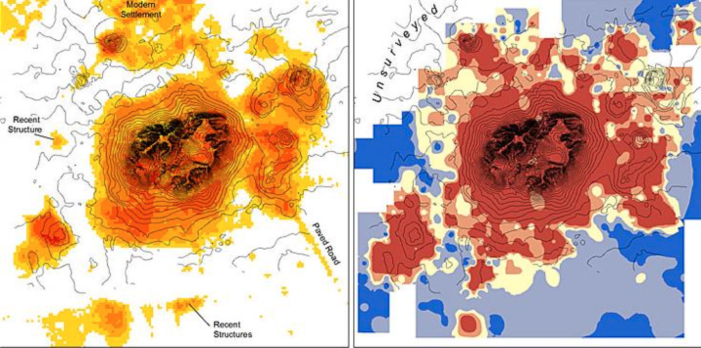
A comparison of ASTER classification (left) and surface artifact distribution (right). In the image on the left yellow indicates a greater than fifty percent probability of finding artifacts and bright orange indicates that the probability is greater than eighty percent.  In the image on the right blue indicates that there are less than two artifacts per square meter and red indicates that there are more than ten. Image courtesy of Bjoern Menze and Jason Ur

Remote sensing technology can be applied to archaeological survey methods helping archaeologists find sites and map the locations of past civilizations. However, the location alone is not enough to create an extensive and intensive record revealing the cycles of rising and falling settlements over many millennia. Two Harvard archealogists used remotely sensed data from ASTER and CORONA, to create a map that not only reflects the location of ancient civilizations, but also provides insight into the number of people living at each site and how often different sites were inhabited.  Through identifying the volume of anthropogenic soils, or soils modified by humans, scientists were able to make a more complete record of the changing landscape of Mesopotamia over time. The CORONA program produced photographs that made it possible for the scientists to locate mounds of earth thought to be made by human settlement, but other satellite and aerial photography images needed to be used to create a more complete map.  These images were then combined with multispectral images from satellite instruments including ASTER, which made it possible to determine whether or not the mounds contained anthropogenic soils.  Using this technique, the scientists were able to create one of the largest systematic remote sensing records for an ancient landscape, including over fourteen thousand sites and covering approximately 22,000km2.

Menze, Bjoern and Ur, Jason. (2012, March 19). Mapping patterns of long-term settlement in Northern Mesopotamia at a large scale. Proceedings of the National Academy of Sciences.

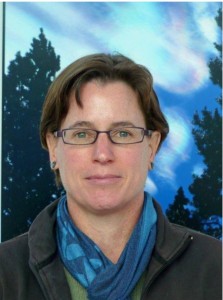
Dr. Helen Worden is the Project Scientist in the Atmospheric Chemistry Division at the National Center for Atmospheric Research.  She is one of the leading experts in the use of MOPITT and Tropospheric Emissions Spectrometer to study carbon monoxide (CO) and other gases in the atmosphere.

What do you study?

HW: I study trace gases in the lowest part of the atmosphere, including air pollutants like ozone (O3) and carbon monoxide (CO), using satellite remote sensing.

MOPITT is one of the instruments you use to study carbon monoxide (CO), can you tell us some of the observations you have observed so far?

HW: I have used MOPITT CO data to follow the global transport of pollution from major urban areas and from large fires. We also use MOPITT data to estimate the sources and strengths of CO emissions.

Recently, I have been using MOPITT data, along with a regional model for weather and chemistry (WRF-Chem) to quantify the reduction in CO emissions due to the traffic restrictions that were imposed during the Beijing 2008 Olympics to improve air quality. Because we know the ratio of CO to CO2 for emissions from fossil fuels in China, we can also estimate the reduction in CO2 for the Beijing Olympics.

You study carbon dioxide (CO2) as well, which is also a trace carbon gas that exists in the lower atmosphere.  Can you explain how it’s different from CO?

HW: CO and CO2 are both emitted from burning fossil fuels and wildfires, but CO2 is a strong greenhouse gas and also has a much longer lifetime in the atmosphere (hundreds of years) compared to CO (less than a few months).

What roles do CO play in the Earth System Science?

HW: CO is a pollutant near the surface, but at normal levels, around 100 ppb (parts per billion), CO is not harmful. (CO is deadly at concentrations larger than 400 parts per million).

Although CO itself does not have a significant greenhouse effect, it converts chemically to ozone, methane and carbon dioxide, which are major greenhouse gases. So, the emissions of CO are considered important to climate change.

Since it has a medium lifetime in the atmosphere (longer than a day, but not more than a few months), CO can be used to track pollution events and how they are transported across the globe. These events, such as large fires, have higher concentrations of CO that are easily measured over atmospheric background levels.

Are efforts to decrease CO emissions working?

HW: Yes, especially with the improved emissions in newer cars.

Finally, what you do is very technical”¦, what inspired you to go into this field?

HW: Understanding our atmosphere is very challenging, but necessary if we want to make informed decisions for our future. I also find remote sensing really interesting and at times, very exciting, like when we launch a satellite and we get a whole new image of our world.