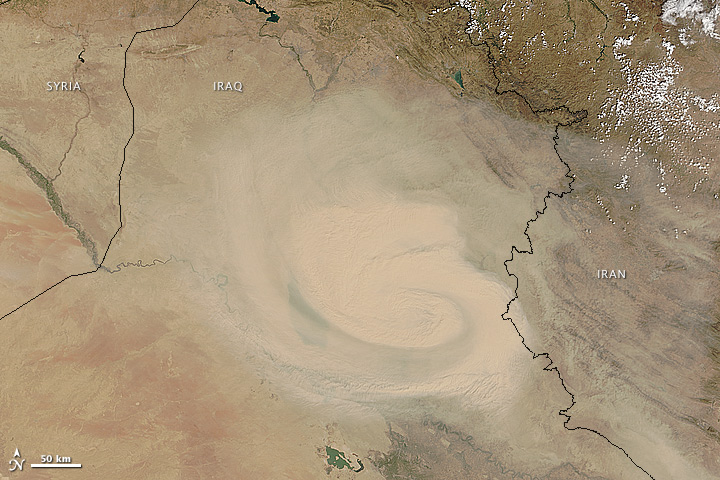
 On September 1st, 2015 Terra’s Moderate Imaging Spectroradiometer (MODIS) captured this image of swirling skies filled with dust over the Middle East. Unlike Haboobs, which are short-lived, these dust storms can last for days and are typically associated with northwesterly wind patterns, known as the shamal. The cyclonic swirl associated with low pressure systems is clearly visible in the dust.


The EOS Flagship
Past News
- December 2025
- October 2025
- July 2025
- May 2025
- February 2025
- November 2024
- April 2024
- February 2024
- December 2023
- October 2023
- April 2023
- February 2023
- December 2022
- October 2022
- August 2022
- July 2022
- June 2022
- April 2022
- March 2022
- October 2021
- September 2021
- August 2021
- June 2021
- May 2021
- April 2021
- March 2021
- February 2021
- January 2021
- September 2020
- August 2020
- July 2020
- April 2020
- February 2020
- January 2020
- December 2019
- November 2019
- October 2019
- September 2019
- August 2019
- April 2019
- March 2019
- November 2018
- October 2018
- August 2018
- July 2018
- June 2018
- May 2018
- November 2017
- June 2017
- August 2016
- July 2016
- June 2016
- May 2016
- April 2016
- March 2016
- February 2016
- January 2016
- December 2015
- November 2015
- October 2015
- September 2015
- August 2015
- April 2015
- February 2015
- December 2014
- November 2014
- October 2014
- September 2014
- August 2014
- May 2014
- April 2014
- March 2014
- February 2014
- January 2014
- December 2013
- November 2013
- October 2013
- September 2013
- August 2013
- July 2013
- June 2013
- May 2013
- April 2013
- March 2013
- February 2013
- January 2013
- September 2012
- June 2012
- May 2012
- April 2012
- March 2012
- February 2012
- January 2012
News By Instrument
News By Science
Category: News and Events
News and Events
MODIS Captures Image of Swirling Dust Storm
2015 Wildfires in Alaska
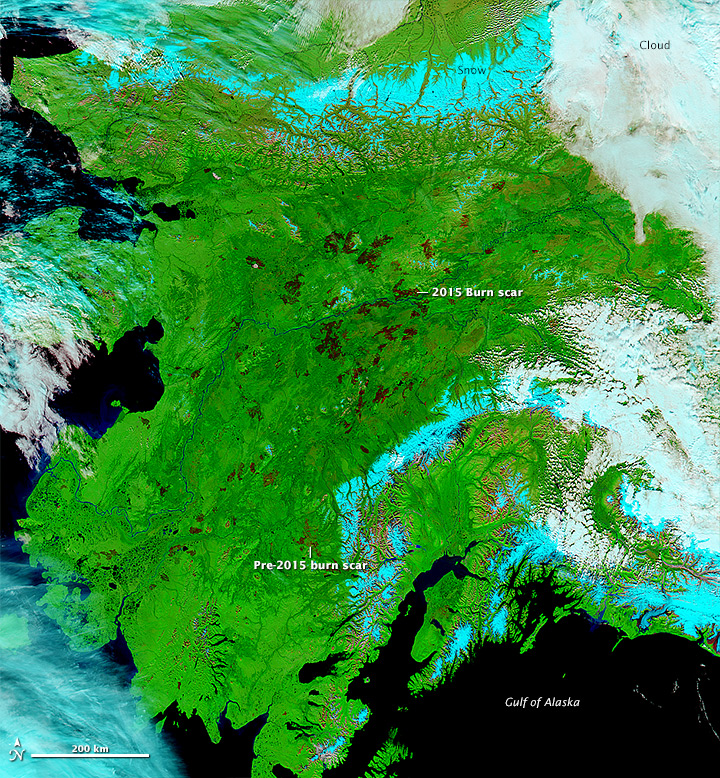 Alaska is experiencing it’s second most severe fire season since 1950 with over 5.2 million acres burned (the average is 800,000 acres per year).
Terra and Aqua Moderate Imaging Spectroradiometer (MODIS) are useful for scientists and land managers to be able to monitor and asses the environmental impact of remote forest fires. This allows groups like the scientists from Universtity of California, Irvine, and Woods Hole Research Center to publish and analysis of carbon emissions for Alaska’s boreal forests. In addition land managing agencies are able to monitor fires unpopulated areas and allow them to burn, freeing up limited resources to be used in highly populated areas.
A New Identity for Denali
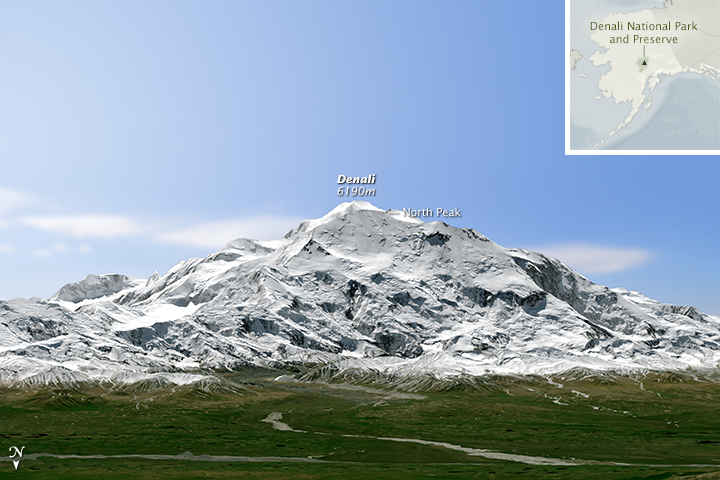 Mount Denali received not only a new name on August 30, 2015, it also received a new elevation. Using the Global Digital Elevation Model (GDEM) product from the Advanced Spaceborne Thermal Emission and Reflection Radiometer (ASTER) data, the listed elevation for Moutn Denali went from 20,320 feet to 20,310 feet. The reduction in elevation was due to a more detailed global elevation survey made possible with the high resolution data from ASTER in the GDEM. Better technology led to a more accurate elevation.
Cabo Verde Hit by First Hurricane in a Century
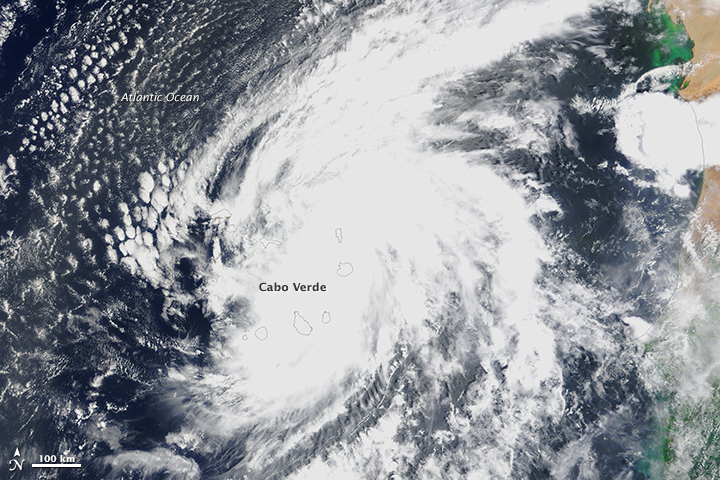 Hurricane Fred is the first to hit Cabo Verde since 1892. The storm caused flash flooding and wind damage.
The Moderate Resolution Imaging Spectroradiometer (MODIS) on Terra acquired this natural-color image of Fred off the west coast Africa at 11:15 a.m. on August 31, 2015 Cabo Verde time, when the storm was at it’s peak Wind speeds reached 75 knots.
The MODIS instrument on Terra also captured images on September 1st as Fred weakened, becoming a tropical storm.
Ship Tracks off the Kamchatka Peninsula
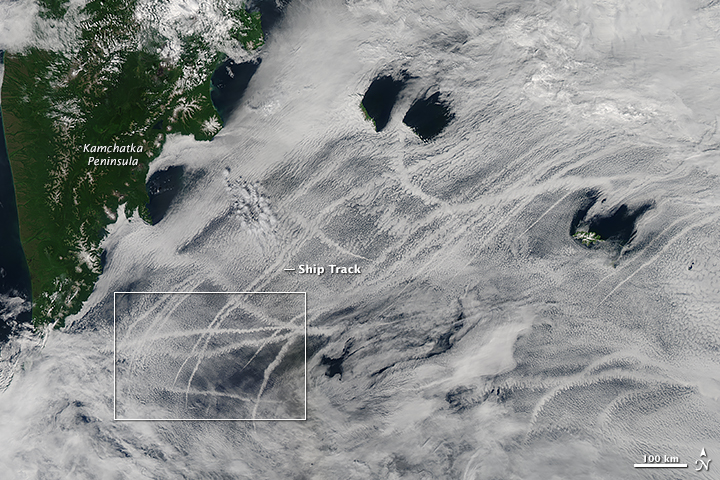 A scientist, Yi-Chun (Jean) Chen, at NASA’s Jet Propulsion Laboratory, and his colleagues were able to show how open-cell versus closed cell clouds affect the brightness, or albedo, of ship tracks.
Using data from MODIS on-board both Aqua and Terra and from the Multi-angle Imaging SpectroRadiometer (MISR) on Terra, the team studied the relationship between ship-emitted aerosols and cloud properties. The results suggested that aerosol plumes increased the amount of clouds and albedo in open-cell formation areas; where as, areas with closed-cells were less susceptible to aerosol plumes.
Research available in the April 2015 Journal of Geophysical Research
Read more on NASA’s Earth Observatory